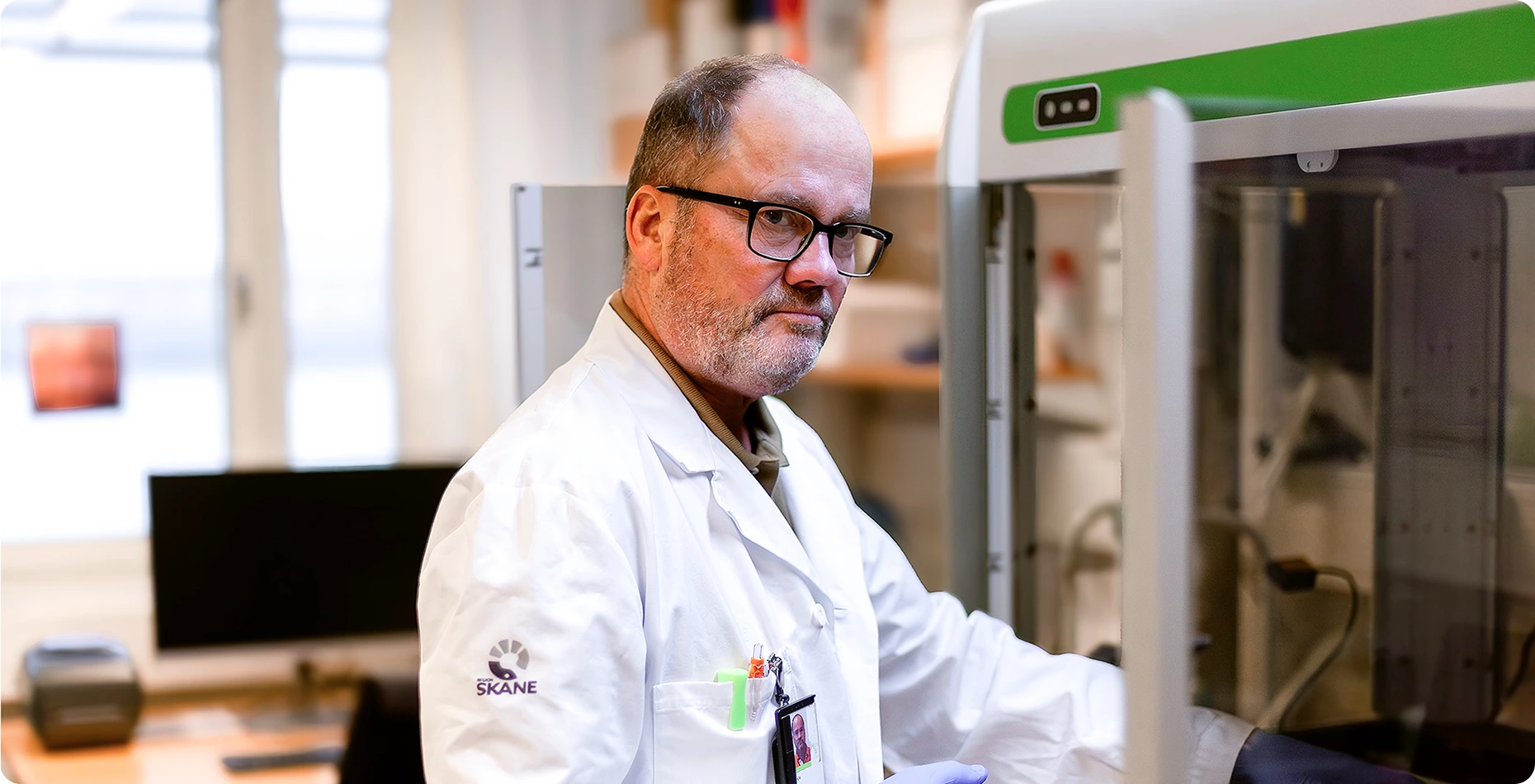
A Personal Journey That Led to a Deeper Understanding of Gut Health
Hans Fischer’s interest in gut health did not begin in a laboratory. It began with a personal health struggle. He suddenly developed severe fatigue, headaches, heart palpitations, bloating, discomfort after meals, and unpredictable reactions to foods that had never caused problems before.
Concerned, Hans visited his general practitioner. Tests revealed very high blood pressure, a rapid pulse, and glaucoma (increased pressure in the eyes). He was prescribed medications for blood pressure and heart rhythm and scheduled for regular eye examinations. Despite multiple consultations and treatments, the symptoms kept returning.
Like many people dealing with chronic health problems, the answers were unclear.
Something deeper was happening.
The Turning Point: Discovering SIBO
Hans eventually consulted a naturopathic doctor for his stomach pain and was given a remedy made from the bark of the Jatoba tree. After two weeks, his stomach symptoms improved, but headaches, high blood pressure, and heart palpitations remained
Hans had regularly analyzed his intestinal microbiome and had previously found that 50% of
his gut bacteria were Prevotella copri. After the Jatoba treatment, new tests showed that these bacteria had dropped to 0%. This led Hans to suspect that the bacteria had been growing in the small intestine and that the Jatoba bark had acted as an antimicrobial.
While researching this, he discovered Small Intestinal Bacterial Overgrowth (SIBO) –
a condition where bacteria from the large intestine grow in the small intestine and disrupt digestion. For the first time, his symptoms started to make sense — but it also raised a deeper question:
Why does SIBO develop in the first place?
From Personal Experience to Research
Han’s search for answers gradually expanded into a deeper exploration of microbiome science, gut barrier function, and nutritional strategies for intestinal health, leading to collaborations with researchers and clinicians in the field.
During this process, he tested around fifty botanicals in the lab and identified a combination of three botanicals with strong antimicrobial effects against intestinal bacteria, as well as Helicobacter pylori, Candida, and common intestinal parasites.
After testing the blend on himself, Hans noticed improvements within days — his stomach symptoms eased and he was able to tolerate foods again. Within a few weeks, his blood pressure and heart rate had normalized, allowing him to stop all medications.
What began as a personal search for answers gradually grew into a mission: to better understand digestive disorders and help others facing the same challenges.
The Beginning of GutFeeling Labs
Han’s journey ultimately led to the creation of GutFeeling Labs, with the goal of combining scientific research, diagnostic tools, and targeted nutritional strategies to better understand and restore gut health.
From his research, Hans developed a formulation called GutClear®, which has since been used by nearly 10,000 people with encouraging results.
Han’s often reflects on how many people struggle with similar digestive problems, trying different herbs, probiotics, and supplements without success. Having access to a laboratory allowed him to investigate the problem more deeply — not just to help himself, but to help others facing the same challenges.
He believes that conditions like SIBO, often linked to chronic stress and bacterial imbalance in the small intestine, may play a larger role in long-term health than previously understood. Just as we maintain oral hygiene to prevent gum disease, Hans suggests that supporting the balance of bacteria in the small intestine may also be important for overall wellbeing.
A Continuing Mission
Today, the work at GutFeeling Labs continues to explore the relationship between the microbiome, gut barrier integrity, and long-term health.
Hans Fischer’s personal experience with SIBO became the starting point for a much larger mission — one focused on improving our understanding of the gut and helping people take meaningful steps toward better digestive health.
Because when the gut functions properly, it supports the health of the entire body.