




The gut and brain are constantly communicating through the gut-brain axis. Research shows that the gut microbiome, bacterial metabolites, intestinal barrier function, inflammation and mental well-being may be interconnected. Gut health can therefore be part of the bigger picture – but it is not the only piece of the puzzle.
Research shows that the gut and brain communicate with each other and that changes in the gut microbiome may be associated with mental well-being. However, the relationship is complex, and the gut microbiome is only one of several factors that may influence anxiety and depression.
In this article, we explore what research says about the relationship between the gut microbiome, diet, probiotics and mental well-being.
Key takeaways
- The gut and brain communicate through what is known as the gut-brain axis.
- Changes in the gut microbiome, known as dysbiosis, particularly when caused by bacterial overgrowth in the small intestine (SIBO), may be associated with changes in the immune system, inflammation and mental well-being.
- Studies have investigated whether probiotics and dietary changes may affect anxiety symptoms.
- Diet and gut health can be part of the bigger picture, but they do not replace treatment for anxiety or depression.
- An analysis of the gut environment (SIBO, leaky gut and risk factors produced by bacteria in the small intestine) can provide information about the gut environment, but cannot diagnose anxiety or depression.
How did interest in the link between the gut microbiome and anxiety begin?
Much of the early research came from animal studies. Mice without gut bacteria showed, among other things, altered stress responses and anxiety-like behaviours. In some studies, these behaviours could be affected by restoring the gut microbiome or by using probiotics.
This sparked interest in how gut bacteria may communicate with the brain. Research has since progressed to studies in humans.
How can the gut microbiome affect the brain?
The gut and brain communicate in both directions through the nervous system, hormones, the immune system and substances produced by gut bacteria.
An imbalanced gut microbiome, such as in SIBO, may be associated with changes in inflammatory signals. These signals can affect communication between the gut and brain. This is part of what is commonly referred to as the gut-brain axis.
Researchers are also investigating how cytokines, inflammatory signalling molecules produced by the immune system, may affect the brain’s neurochemistry. This may be one of the mechanisms behind the relationship between inflammation, gut health and mental well-being.
What does inflammation have to do with the gut microbiome and mental well-being?
An imbalanced gut microbiome may be associated with low-grade inflammation. During inflammation, the immune system releases signalling molecules called cytokines.
These signals can affect communication between the immune system, gut and brain. Researchers are therefore investigating whether inflammatory processes may help explain why anxiety and depression are more common in people with certain chronic gastrointestinal diseases.
Studies have reported that more than half of people with chronic inflammatory bowel diseases such as Crohn’s disease and ulcerative colitis may also experience anxiety or depression. Similar associations have also been observed in IBS.
This does not mean that inflammation or gut problems alone cause anxiety or depression, but rather highlights the complex interaction between the gut, immune system and brain.
Can IBS, stress and mental well-being be connected?
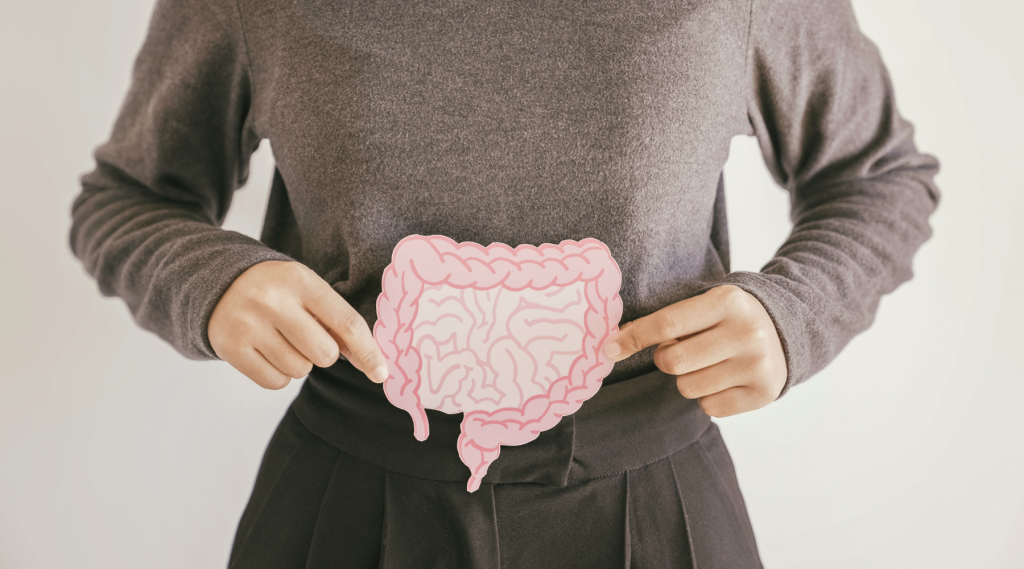
The gut and brain influence each other in both directions. This means that psychological stress can affect gastrointestinal function, while long-term digestive problems can also affect how we feel mentally.
Anxiety and depression are also more common among people with certain chronic gastrointestinal conditions such as IBS.
New research is therefore also investigating whether knowledge about the gut-brain axis and gut microbiome can contribute to new ways of understanding and managing chronic gastrointestinal conditions that often occur alongside anxiety and depression.
How can the gut contribute to anxiety and depression?
This is why the gut-brain axis may be worth exploring.
Anxiety and depression have traditionally been viewed as conditions that primarily involve the brain. In recent years, however, research has shown that communication between the gut and brain – the so-called gut-brain axis – may be part of a much larger biological system.
Gut bacteria, gut barrier function, the immune system and various microbial metabolites may all influence signalling between the gut and brain. At the same time, stress and mental health can affect gut motility, barrier function and the microbial environment. The relationship therefore likely works in both directions.
This does not mean that anxiety or depression are caused by the gut. However, for some people, there may be reason to investigate whether disturbances in the gut environment exist alongside these problems and may potentially contribute to them.
The gut microbiome and depression
Several large studies have found associations between the microbial composition of the gut and depression.
In a study published in Nature Communications, several bacterial groups in the gut microbiome were identified as being associated with depressive symptoms. Several of these bacteria are involved in biological processes related to glutamate, GABA, serotonin and short-chain fatty acids. (Nature)1*
Another study involving more than 7,000 participants found differences in both bacterial species and microbial functions among people with depression and anxiety. Associations were observed with microbial functions related to tryptophan and glutamate metabolism, among other things. (PubMed)2*
It is important to emphasise that these types of studies primarily show associations. They do not prove that changes in the microbiome cause depression.
SIBO – when bacteria are in the wrong place
One aspect that has received increasing attention in gut-brain research is bacterial levels in the small intestine.
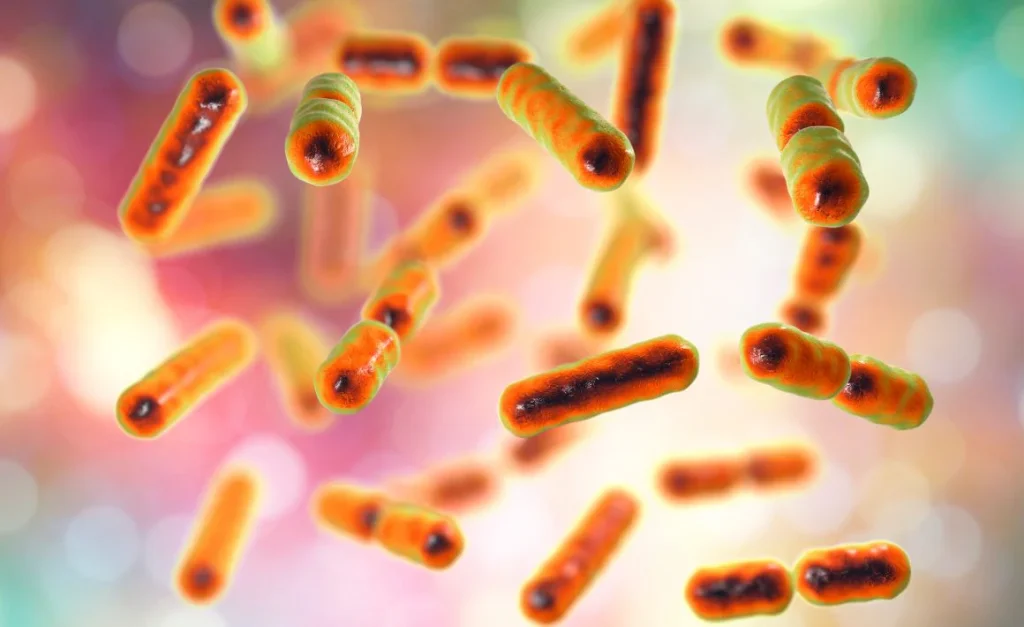
SIBO (Small Intestinal Bacterial Overgrowth) refers to an increased presence of bacteria in the small intestine and is often associated with stress. SIBO can cause bacterial breakdown of food in the small intestine and the production of microbial metabolites in addition to gas, which may contribute to bloating, abdominal discomfort and diarrhoea or constipation.
Much of the research on the microbiome and mental health is based on stool samples. These primarily reflect the bacterial environment in the large intestine. The small intestine, on the other hand, is where a large proportion of nutrient absorption takes place. When microorganisms (bacteria and fungi) are in close contact with food contents, these microbes can use nutrients from food, grow and produce metabolites that may not only irritate the intestinal lining and immune system but may also affect the brain through the bloodstream.
Investigating signs of microbial overgrowth or altered bacterial activity in the small intestine can therefore provide complementary information about the gut environment.
Leaky gut – when the intestinal barrier changes
The lining of the small intestine forms an advanced barrier between the contents of the gut and the rest of the body. Normally, it carefully regulates which substances are allowed to pass through.
In SIBO, increased intestinal permeability (sometimes commonly referred to as leaky gut) is often observed, and barrier function may be altered.
This is particularly interesting in gut-brain research because the passage of bacterial components through a permeable small intestinal lining may affect the immune system and contribute to low-grade systemic inflammation. Inflammatory signals can, in turn, communicate with the brain through the bloodstream, immune system and nervous system, among other pathways.
Research has reported associations between various markers of intestinal barrier function and depression. The results are not yet sufficient to use these markers to diagnose mental illness, but they support the hypothesis that the intestinal barrier may be one of several links between the gut and brain.
TMAO – an example of communication between the microbiome and the body
Gut bacteria produce a large number of substances that can be absorbed by the body.
One such substance is trimethylamine (TMA), which bacteria can produce from certain nutrients. TMA is then converted in the liver into trimethylamine N-oxide (TMAO).
TMAO has mainly been studied in relation to cardiovascular disease, metabolism and inflammation, but research has also investigated associations between TMAO and mental health. (OUP Academic)3*
For example, one human study found an association between TMAO levels and depressive symptoms. Another study found altered TMAO levels in people with anxiety disorders. The results are not consistent, which emphasises that TMAO should not be considered a marker of depression or anxiety in itself. (PubMed Central (PMC))4*
TMAO is interesting as an example of how metabolites produced by gut bacteria may affect our well-being.
Three perspectives on the gut-brain axis
A combined analysis can therefore provide information from three different biological levels:
SIBO – microbial activity in the small intestine
Provides information about signs of increased bacterial activity in the small intestine.
Leaky gut – intestinal barrier function
Provides information about signs of increased intestinal permeability.
TMAO – microbial and metabolic activity
Provides information about a metabolite produced by gut bacteria and its effects on the rest of the body.
Together, these parameters can provide a broader perspective on the gut-brain axis.
A parallel assessment – not a replacement
Anxiety and depression are complex conditions that can be influenced by genetic, psychological, social and biological factors. Assessment and treatment of mental health conditions should therefore take place within the regular healthcare system when medically appropriate.
An analysis of SIBO, intestinal permeability and TMAO should not be used to diagnose anxiety or depression and cannot determine whether psychological symptoms are caused by the gut.
However, the analysis can be used as a complementary perspective for people who want to explore their gut health and gain information about biological factors that research currently links to communication between the gut and brain.
A rapidly growing field of research
The gut-brain axis is still a relatively young field of research. At the same time, large human studies have shown clear associations between the gut microbiome and depressive and anxiety-related symptoms. (PubMed)2*
The next important step is to understand which changes are causes, which are consequences and which may be influenced, for example by supporting a balanced gut microbiome and through lifestyle changes.
This is why we see analysis of microbial activity in the gut, barrier function and microbial metabolites as an interesting complement when seeking to understand the interaction between gut bacteria, the body and the brain. (PubMed)5*
Can probiotics replace treatment?
No.
Diet, probiotics and other measures that support gut health can be part of a healthy lifestyle, but they do not replace treatment for anxiety or depression. Research has even shown that probiotics may worsen symptoms in SIBO.
If you have or suspect that you have anxiety, depression or other mental health concerns, you should seek help from a healthcare professional or psychologist.
Scientific references
- Radjabzadeh D, et al. Gut microbiome-wide association study of depressive symptoms. Nature Communications. 2022;13:7128. (Nature)
- Brushett S, et al. Gut feelings: the relations between depression, anxiety, psychotropic drugs and the gut microbiome. Gut Microbes. 2023;15:2281360. (PubMed)
- Liu X, et al. Trimethylamine-N-Oxide and Precursors as Novel Potential Biomarkers for Anxiety Disorder. Laboratory Medicine. 2022;53:177–183. (OUP Academic)
- Meinitzer S, et al. Sex-Specific Associations of Trimethylamine-N-Oxide and Zonulin with Signs of Depression in Carbohydrate Malabsorbers and Nonmalabsorbers. Disease Markers. 2020. (PubMed Central (PMC))
- Dilmore AH, et al. Medication use is associated with distinct microbial features in anxiety and depression. Molecular Psychiatry. 2025;30:2545–2557. (PubMed)
Please note: The Gutfeeling Labs analysis is a health and lifestyle analysis and is not intended to diagnose or treat anxiety, depression or any other disease. Results do not replace medical or psychiatric assessment.