


Do you get stomach pain when you eat fiber-rich foods? You are not alone. Some people experience bloating, gas, abdominal pain, diarrhea or constipation when they increase their fiber intake.
At the same time, fiber is an important part of a healthy diet and contributes to normal bowel function. So why can something that is generally considered beneficial for the gut sometimes cause digestive discomfort?
In this article, we look at why fiber can cause digestive symptoms, what role gut bacteria may play, and when SIBO may be a possible factor.
Why does fiber cause stomach pain?
There are several reasons why fiber can cause digestive discomfort. One common reason is increasing your fiber intake too quickly. The digestive system simply needs time to adapt.
Fiber is not completely broken down and absorbed in the small intestine. As a result, much of it reaches the large intestine, where bacteria ferment certain types of fiber.
This fermentation naturally produces gases, including hydrogen, carbon dioxide and methane. For some people, this can lead to significant symptoms such as a bloated or tender abdomen, sometimes appearing 1–3 hours after a meal.
This is a normal part of digestion, but in some people gas production can be more noticeable and cause bloating, abdominal pain or other digestive symptoms. The type and amount of fiber you eat can also affect how your digestive system responds.
Common symptoms include:
- Gas
- Bloating
- Stomach pain or abdominal pain
- Diarrhea
- Constipation
- Changes in bowel habits
What does SIBO have to do with fiber?
When bacteria ferment fiber and other carbohydrates, gas is produced. Normally, much of this bacterial fermentation takes place in the large intestine.
If there are more bacteria than usual in the small intestine, fermentation can begin earlier in the digestive process. This may contribute to gas production, bloating and other digestive symptoms.
For this reason, some people with SIBO may find that fiber-rich foods make their symptoms worse.
SIBO may be associated with:
- Bloating
- Gas
- Digestive discomfort after meals
- Abdominal pain
- Diarrhea or constipation
- Acid reflux
- Reduced appetite or feeling full quickly
SIBO is a complex condition in which several factors may play a role. Changes in intestinal motility are one factor, while previous intestinal infections, certain medications and other factors affecting the gastrointestinal tract may also contribute.
It is important to remember that sensitivity to fiber is not a diagnostic test for SIBO. Experiencing stomach pain after eating fiber does not automatically mean that you have SIBO.
If you suspect SIBO, the diagnosis should be assessed based on your symptoms and appropriate medical evaluation. Hydrogen- and methane-based breath tests are among the tests used when investigating SIBO.
Should you avoid fiber if it causes stomach pain?
Not necessarily.
Fiber is important for the gut and contributes to normal bowel function. The problem may therefore not be fiber itself, but rather the type of fiber you eat, the amount you consume and how sensitive your digestive system is.
If you have recently started eating more fiber-rich foods, try increasing the amount gradually. It can also be helpful to pay attention to which foods cause symptoms and in what amounts.
Make sure you drink enough fluids, particularly when increasing your fiber intake.
If you have recurring digestive symptoms that do not improve or that affect your everyday life, it may be a good idea to contact a healthcare professional to investigate the possible cause.
What can you do if fiber causes stomach pain?
The first step is to try to understand what your own digestive system reacts to.
You can, for example:
- Increase your fiber intake gradually.
- Drink enough fluids.
- Try different types of fiber-rich foods.
- Pay attention to which foods and quantities cause symptoms.
- Avoid concluding that fiber is “bad” for your gut – the type, amount or an underlying digestive issue may be more relevant.
- Try to eat regular meals and give your digestive system time to work between meals.
It can also be helpful to look at the bigger picture. Stress, sleep, physical activity and other aspects of everyday life can influence how your digestive system functions.
Can a low-FODMAP diet help if fiber causes digestive symptoms?
For some people with IBS and other functional digestive disorders, a low-FODMAP diet may help reduce symptoms such as gas, bloating and abdominal pain.
FODMAPs are a group of carbohydrates that can be difficult for some people to absorb and are readily fermented by bacteria in the gut. This can contribute to gas production and other digestive symptoms.
A low-FODMAP diet involves reducing certain FODMAP-rich foods for a limited period and then gradually reintroducing them. This can help identify which foods your digestive system actually reacts to.
This does not mean that you need to stop eating fiber. Many fiber-rich foods can still be included in a low-FODMAP diet.
How was GutClear® developed?
After analyzing the gut microbiota of more than 20,000 people in Sweden, we observed indications of potentially unfavorable bacterial overgrowth in the small intestine, also known as small intestinal bacterial overgrowth (SIBO), among many people with IBS-like symptoms, particularly a tender and bloated abdomen between meals.
Gutfeeling Labs co-founder Hans Fischer also experienced SIBO himself. This led to a strong interest in developing a product that could address this type of problem.
Early on, we observed that bacteria associated with SIBO were particularly sensitive to bark from the magnolia tree. To broaden the effect, we combined it with two additional botanical ingredients to which these bacteria also appeared to be sensitive.
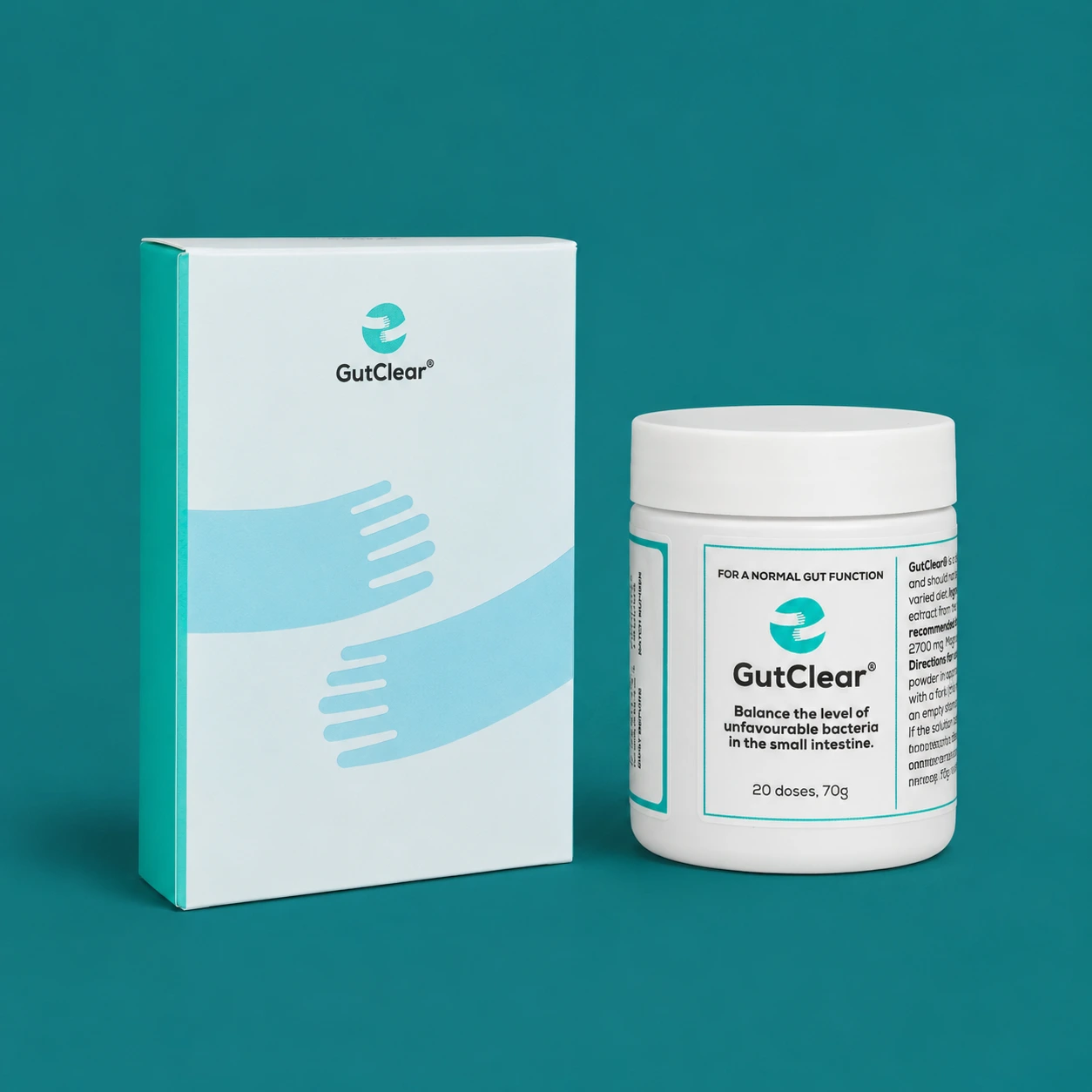
This became GutClear®, a patented combination that we developed as our own dietary supplement in powder and capsule form.

SIBO can recur if the underlying factors are not addressed. Stress is one factor that may contribute to digestive symptoms and altered gut function.
If you frequently experience abdominal pain, bloating or other symptoms when eating fiber, SIBO may be one possible explanation. However, these symptoms can have many different causes and should not be considered proof of SIBO.
Breath tests for SIBO have limitations, which is why we chose to develop a test that looks at a broader range of bacterial markers rather than only gas-producing bacteria, while also being easier to perform.
We developed a urine test that can provide information about markers associated with the intestinal environment, including markers related to intestinal permeability and bacterial metabolites from the small intestine.
The test is intended to provide additional information about potential underlying microbial factors, together with advice and recommendations based on the analysis results.
At Gutfeeling Labs, we believe that when you experience a tender or bloated abdomen, it can be valuable to look beyond individual foods and try to understand why your digestive system reacts the way it does. Understanding your individual gut health may help you make more informed choices about diet and lifestyle.
Kan SIBO göra att man får ont i magen av fibrer?
SIBO står för Small Intestinal Bacterial Overgrowth och innebär att det finns en onormalt stor mängd bakterier i tunntarmen.
Tunntarmen ska inte vara bakteriefri. Det finns bakterier där även hos friska personer, men mängden är normalt betydligt lägre än i tjocktarmen. Om bakteriemängden i tunntarmen ökar kan bakterierna börja fermentera kolhydrater tidigare i matsmältningen.
Det kan ge mer gaser och bidra till uppblåsthet, magont och andra magbesvär.
Det kan vara en förklaring till varför vissa personer med SIBO upplever att de reagerar på fiberrik mat. Men att man får ont i magen av fibrer betyder inte automatiskt att man har SIBO. Det finns många andra saker som kan ligga bakom.