


Can the Gut Microbiome Be Linked to Parkinson’s Disease?
Yes. An increasing number of studies are investigating the relationship between the gut microbiome and Parkinson’s disease.
People with Parkinson’s may have differences in their gut microbiome composition compared to individuals without the disease. These changes have been associated with inflammation, metabolism, and communication between the gut and the brain.
However, it remains unclear whether:
- changes in the gut microbiome contribute to the development of Parkinson’s disease,
- Parkinson’s disease itself alters the gut microbiome, or
- both are influenced by other factors.
This distinction is important when interpreting research findings.
What Is Parkinson’s Disease?
Parkinson’s disease is a progressive neurological disorder that primarily affects movement. Common motor symptoms include tremors, slowed movements, and muscle stiffness.
The disease is linked to changes in nerve cells in the brain, especially the loss of dopamine‑producing neurons.
A protein central to Parkinson’s research is α‑synuclein. In Parkinson’s disease, misfolded α‑synuclein can accumulate and form structures known as Lewy bodies inside nerve cells.
What Is Desulfovibrio?
Desulfovibrio is a genus of bacteria naturally found in the gastrointestinal tract. These bacteria belong to the group of sulfate‑reducing bacteria and can produce hydrogen sulfide (H₂S).
The presence of Desulfovibrio is not automatically harmful. The gut microbiome contains many microorganisms, and their impact depends on factors such as abundance, environment, and interactions with other microbes and the host.
Interest in Desulfovibrio has grown because some studies have observed differences in its levels in people with Parkinson’s disease.
What Did the Finnish Study Show?
In 2021, Finnish researchers examined Desulfovibrio in 20 people with Parkinson’s disease and 20 healthy controls.
They found that:
- Desulfovibrio was present in all Parkinson’s participants
- Levels were higher in Parkinson’s patients than in controls
- The amount of Desulfovibrio correlated with disease severity
Researchers also proposed potential mechanisms through which bacterial substances might influence α‑synuclein aggregation.
However, the study was small and demonstrated association, not causation.
How Could Gut Bacteria Influence α‑Synuclein?
One hypothesis involves the gut–brain axis.
The gut and brain communicate through:
- the nervous system
- the immune system
- hormones and signaling molecules
- metabolites produced by gut microbes
Research has shown that changes related to Parkinson’s disease can appear in the gastrointestinal tract.
One proposed model is that alterations in the gut environment may influence processes that contribute to α‑synuclein accumulation or modification. Researchers are exploring whether pathological α‑synuclein could spread from the gut to the brain via neural pathways such as the vagus nerve.
This remains a hypothesis — not a confirmed explanation.
What Role Do Hydrogen Sulfide and LPS Play?
Desulfovibrio can produce hydrogen sulfide (H₂S) and lipopolysaccharide (LPS).
The Finnish study discussed whether substances produced by Desulfovibrio might influence α‑synuclein aggregation. Researchers also mentioned magnetite, which some strains can produce, as a potential factor.
This does not mean H₂S or LPS cause Parkinson’s disease. These are examples of biological mechanisms being explored to understand how gut conditions might relate to disease processes.
The Gut–Brain Axis and Parkinson’s Disease
The gut–brain axis describes the bidirectional communication between the gastrointestinal tract and the brain.
Communication occurs through:
- the nervous system
- the immune system
- hormones and signaling molecules
- microbial metabolites
This makes the gut–brain axis an important research area in neurology.
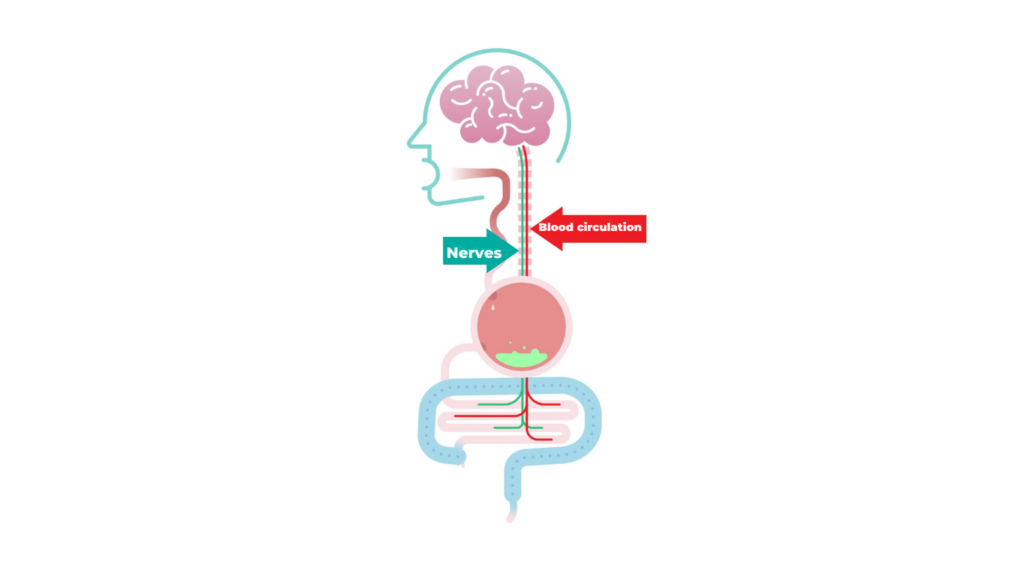
In Parkinson’s disease, interest is especially high because gastrointestinal symptoms — such as constipation — can appear long before motor symptoms.
However, digestive symptoms alone are not a sign of Parkinson’s disease.
Can Altered Gut Microbiome Cause Parkinson’s Disease?
We do not know.
Research shows intriguing associations, but it is not yet possible to say that microbiome changes directly cause Parkinson’s disease.
Possible explanations include:
- Gut microbiome changes may contribute to processes involved in disease development.
- Parkinson’s disease may alter gut function and thereby the microbiome.
- Both may be influenced by external factors.
Ongoing research continues to explore these relationships.
Can a Gut Microbiome Test Detect Parkinson’s Disease?
No.
A gut microbiome test cannot diagnose Parkinson’s disease.
Although studies show differences in the microbiome of people with Parkinson’s, there is no validated microbiome‑based diagnostic tool.
A microbiome test can provide information about microorganisms in a sample, but it should not be interpreted as a test for Parkinson’s disease or as a predictor of future disease.
What Can We Learn From the Research?
Research on the gut microbiome and Parkinson’s disease highlights the close connection between the gut and the brain.
The Desulfovibrio study is interesting because it suggests a possible link between:
- a specific bacterial group,
- substances produced by these bacteria, and
- processes involving α‑synuclein.
But one study is not enough to establish causation.
New research continues to investigate how microbiome changes may relate to Parkinson’s disease and whether certain microbial patterns could be relevant for future diagnostics or therapies.
Conclusion
The connection between the gut microbiome and Parkinson’s disease is a growing research field.
A Finnish study found higher levels of Desulfovibrio in people with Parkinson’s disease, but this does not prove that the bacteria cause the condition.
The most important takeaway is not to identify a single bacterium as “the cause,” but to understand how gut flora, the gut–brain axis, the immune system, and α‑synuclein may interact.
Research is promising but still ongoing. A gut microbiome test cannot diagnose Parkinson’s disease today.