
Can SIBO cause rosacea?
Research suggests that there is a connection between SIBO (Small Intestinal Bacterial Overgrowth) and rosacea in some individuals. Rosacea is a complex skin condition influenced by several factors, including genetics, the immune system, environment, and gut health. For some people, SIBO may be a contributing factor.
This article reviews what current research says about the link between SIBO and rosacea, along with the gut–skin axis.
What is rosacea?
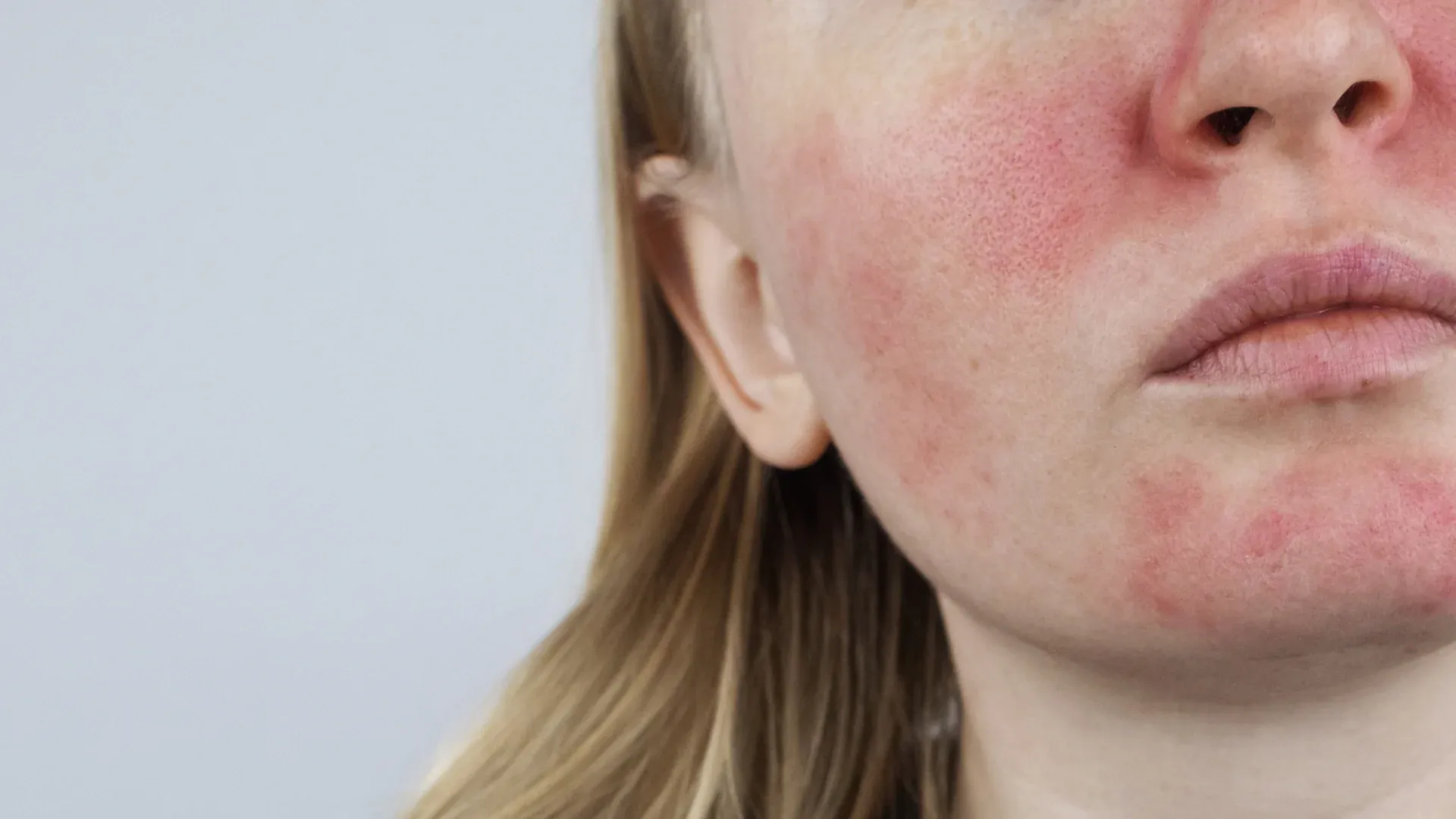
Rosacea is a chronic inflammatory skin condition that primarily affects the face. Common symptoms include redness, visible blood vessels, bumps, and sometimes a burning or stinging sensation. Symptoms often occur in episodes and vary in severity.
Rosacea most commonly appears on the cheeks, nose, chin, and forehead. It is most common in adults and often develops gradually over time.
Although the exact cause of rosacea is not fully understood, research has highlighted SIBO as a possible contributing factor in certain individuals.
What can influence rosacea?
Factor | How it may influence rosacea |
Genetics | May affect the risk of developing rosacea. |
Immune system | Can contribute to the inflammation characteristic of the condition. |
Environment | Sun, heat, cold, and other external factors can trigger or worsen symptoms. |
Skin microbiome | Changes in the skin’s bacterial flora may play a role for some individuals. |
Gut health | Research suggests that gut health and SIBO may be linked to rosacea in several people. |
What is SIBO?
SIBO (Small Intestinal Bacterial Overgrowth) occurs when bacteria grow excessively in the small intestine. This can affect digestion and cause symptoms such as bloating, gas, abdominal pain, and altered bowel habits.
SIBO has also been linked to various health issues, including fatigue, brain fog, concentration and memory difficulties, anxiety and depression, headaches/migraines, skin problems (especially rosacea), nutrient deficiencies (e.g., B12, iron, fat-soluble vitamins), abdominal fat and weight gain, metabolic disturbances including insulin resistance and metabolic syndrome, restless legs syndrome, fibromyalgia, and generalized pain.
SIBO can have several underlying causes, such as reduced intestinal motility, previous gastrointestinal infections, or other conditions affecting normal small-intestine function.
Question | Answer |
Can SIBO cause rosacea? | Research shows a connection |
Do all people with rosacea have SIBO? | No, but many do |
Do all people with SIBO have rosacea? | No, but many do |
Can treating SIBO improve rosacea? | Some studies show improvement in certain individuals |
Is there a connection between SIBO and rosacea?
Yes. Several studies have shown that SIBO is more common in people with rosacea than in those without. However, this does not mean that SIBO causes rosacea or that everyone with rosacea has SIBO.
How can the gut affect the skin?
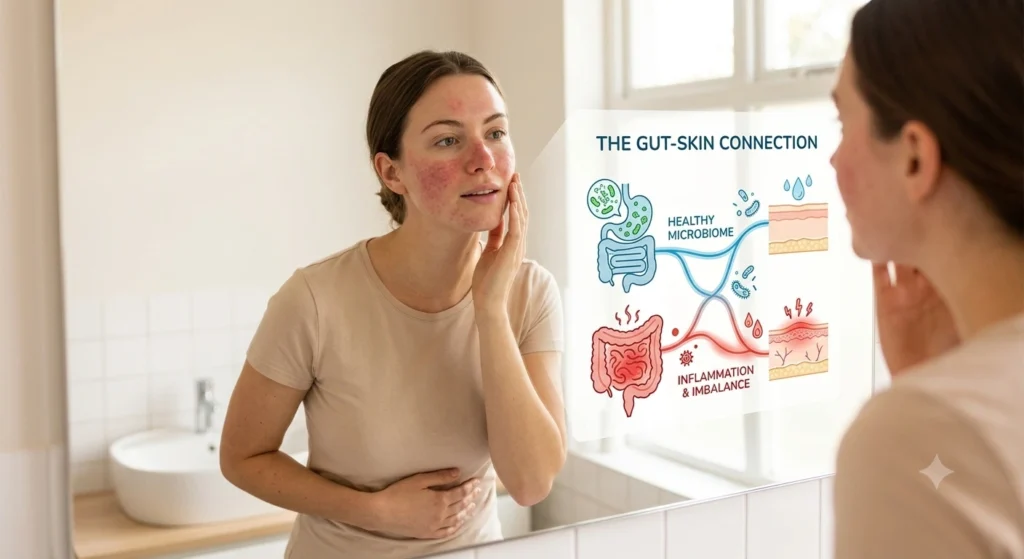
The gut and skin communicate through what is known as the gut–skin axis. Research suggests that changes in the gut environment can disrupt the immune system and contribute to inflammatory processes, which may influence skin health in some individuals.
In SIBO, bacterial overgrowth in the small intestine may contribute to increased immune activation and inflammatory signals that can also affect the skin.
The exact mechanism is not yet fully understood, but research on the gut–skin axis is rapidly evolving.
What does the research say?
Research question | What the research shows |
Is there a connection between SIBO and rosacea? | Yes. Several studies have found a higher prevalence of SIBO in people with rosacea. |
Does SIBO cause rosacea? | There is currently no definitive scientific evidence explaining how SIBO causes rosacea. |
Can SIBO cause rosacea? | Yes, in some patients. |
Can reducing SIBO improve rosacea? | Some studies show symptom improvement in certain patients after reducing SIBO. |
Is more research needed? | Yes. More studies are needed to understand the connection and identify who may benefit from evaluation and treatment. |
Does rosacea mean you have SIBO?
Even though research shows a connection between SIBO and rosacea in some individuals, rosacea does not automatically mean that SIBO is present. However, if you have rosacea along with recurring digestive symptoms such as bloating, gas, or altered bowel habits, it may be relevant to discuss your symptoms with a healthcare professional.
Should people with rosacea be evaluated for SIBO?
Evaluation for SIBO may be relevant for individuals who have rosacea combined with long-term digestive symptoms. The need for evaluation should be assessed individually by healthcare professionals.
Symptoms that may justify further investigation include:
- Bloating
- Gas
- Abdominal pain
- Altered bowel habits
- Digestive symptoms that recur after meals
Because these symptoms can also occur in other conditions, proper diagnosis is important before starting treatment.