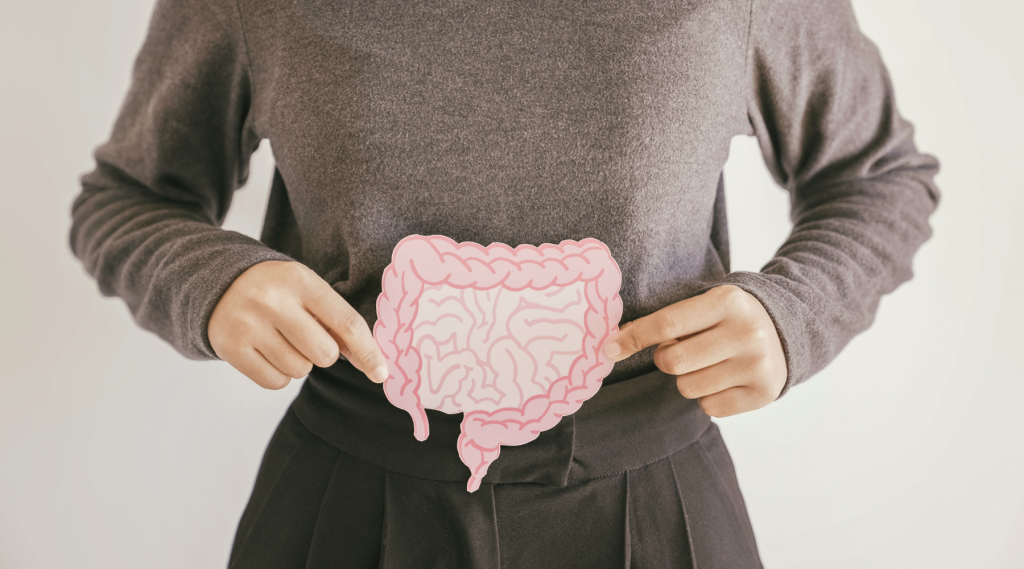






Ghrelin is a hormone that plays a central role in hunger and appetite. It is produced primarily in the stomach, but also in the small intestine and other parts of the body. Ghrelin is part of the gut-brain axis, through which the gut and brain communicate via, among other things, hormones, nerve signals, the immune system and the bloodstream. Research shows that the gut microbiota may influence signals involved in appetite regulation, and several bacterial groups have been associated with changes in ghrelin levels. However, these relationships are complex and should not be interpreted to mean that a particular bacterium automatically causes changes in hunger or metabolism. Protein-rich foods, sufficient sleep, a varied diet and good conditions for a healthy gut environment can all be important parts of a healthy lifestyle that supports the body's natural regulation of hunger and satiety.
Ghrelin is a hormone that is primarily produced and released in the stomach, but also in the small intestine, pancreas and brain. It is often referred to as the “hunger hormone” because it stimulates appetite and plays an important role in the body’s regulation of hunger, satiety and energy balance.
Ghrelin is also part of the communication between the gut and the brain. This communication takes place through, among other things, the bloodstream, the immune system and the vagus nerve, and is commonly referred to as the gut-brain axis.
How does ghrelin work in the body?
Ghrelin can communicate with the brain both through the bloodstream and via the vagus nerve. The vagus nerve is an important connection between the gastrointestinal tract and the brain and transmits information about what is happening in the body.
When ghrelin reaches the brain, it can influence areas that regulate appetite and eating behaviour. The hormone is also involved in the body’s energy balance and fat storage.
Ghrelin is therefore not simply a hormone that signals hunger. It is part of a complex system in which several hormones, nerve signals and signals from the gut work together to regulate our energy intake.
The gut-brain axis and ghrelin
The gut and brain communicate continuously with each other. Signals travel in both directions and are influenced by, among other things:
- The enteric nervous system
- The vagus nerve
- Hormones
- The immune system
- The gut microbiota
Ghrelin is one of the signalling molecules involved in this communication.
This means that changes in the gastrointestinal tract and gut environment may potentially influence the signals that regulate hunger and satiety.
Can an imbalance in the gut affect ghrelin?
Research shows that there is a connection between the gut microbiota and the signals that regulate appetite and metabolism. Gut bacteria can, among other things, influence the environment in which ghrelin and other hormones function.
Approximately 40 percent of the ghrelin-producing cells in the gastrointestinal tract are found in the small intestine. This makes the small intestine particularly interesting when studying the relationship between gut bacteria, ghrelin and the gut-brain axis.
In SIBO (Small Intestinal Bacterial Overgrowth), there is an overgrowth of bacteria in the small intestine. This has raised interest in whether changes in the bacterial composition of the small intestine may affect ghrelin production and, consequently, appetite and metabolism.
At the same time, it is important to distinguish between research associations and proven causal relationships. The fact that gut bacteria may influence ghrelin does not mean that a specific bacterium or SIBO automatically leads to altered ghrelin levels in a particular individual.
Which gut bacteria may affect ghrelin?
Studies have investigated how different bacteria and bacterial groups may be associated with ghrelin levels in the blood.
In the research underlying this article, the following associations have been observed:
Bacteria/bacterial groups | Observed association with ghrelin |
Clostridium | Associated with increased ghrelin levels |
Ruminococcus | Associated with increased ghrelin levels |
Faecalibacterium | Associated with lower ghrelin levels |
Prevotellaceae | Associated with lower ghrelin levels |
Bifidobacterium longum | Has shown the potential to influence ghrelin’s effects |
Lactobacillus rhamnosus | Has shown the potential to influence ghrelin’s effects |
Lactobacillus gasseri | Has shown the potential to influence ghrelin’s effects |
These associations are interesting because they show how the gut microbiota may be involved in the body’s regulation of appetite. However, this remains a complex area of research in which many factors interact.
5 factors that may affect hunger and ghrelin
It is not possible to control ghrelin through a single measure. However, several factors may influence hunger, satiety and the body’s hormonal signals.
1. Protein may increase satiety
Protein-rich meals may contribute to greater satiety and influence ghrelin levels.
In a study involving 21 men, participants were given either a bagel-based breakfast or a breakfast containing eggs. Those who ate eggs had lower ghrelin levels, reported less hunger three hours later and consumed fewer calories over the following 24 hours.
It may therefore be beneficial to include a protein-rich food source at breakfast, such as eggs, fish, yoghurt or other protein-rich foods.
Choline in eggs
Egg yolks also contain choline, a nutrient with several important functions in the body. It has been linked to the body’s fat metabolism, but it would not be accurate to describe choline itself as a “fat-burning” substance.
2. Cooled potatoes contain more resistant starch
Boiled potatoes are a highly satiating food. When potatoes are cooled after cooking, part of the starch changes into resistant starch.
Resistant starch is not broken down in the same way as ordinary starch in the small intestine. It can therefore reach the large intestine, where it serves as nourishment for certain gut bacteria.
The bacteria can ferment the resistant starch and, among other things, produce short-chain fatty acids, such as butyrate. These substances have several functions in the gut and are an important area of research within the field of the gut microbiota.
3. Fish and omega-3
Oily fish contains omega-3 fatty acids. Omega-3 has been studied in relation to several processes that influence metabolism and appetite regulation, including the hormone leptin.
Leptin is often referred to as a satiety hormone because, among other things, it signals information to the brain about the body’s energy stores.
Oily fish such as salmon and mackerel can therefore be part of a varied diet with good-quality fats.
4. Sleep affects hunger and appetite
Sleep is important for the body’s hormonal regulation and can also influence hunger and appetite.
Studies have shown that sleep deprivation may be associated with:
- Increased ghrelin levels
- Lower leptin levels
- Increased hunger
Prioritising sufficient sleep is therefore an important part of a healthy lifestyle and may influence how hunger and satiety are regulated.
5. Gut health and the microbiota
Because the gut and brain communicate through the gut-brain axis, the gut environment is also relevant when studying appetite regulation.
A varied diet and a healthy lifestyle may provide better conditions for a balanced gut environment.
In cases of recurring digestive problems or suspected SIBO, it may be relevant to investigate possible underlying causes. Gutfeeling Labs has developed GutClear® as part of its approach to supporting the gut environment.
Can ghrelin affect hunger and sugar cravings?
Ghrelin is primarily associated with hunger and appetite. When ghrelin levels increase, the signals to the brain that it is time to eat may become stronger.
At the same time, hunger and sugar cravings are influenced by many other factors, including:
- Sleep
- Stress
- Meal patterns
- Dietary composition
- Physical activity
- Individual differences
It is therefore not possible to explain hunger or sugar cravings through ghrelin alone.
What is the difference between ghrelin and leptin?
Ghrelin and leptin are two hormones that play different roles in the regulation of hunger and satiety.
Hormone | Simplified description | Main role |
Ghrelin | The hunger hormone | Stimulates hunger and appetite |
Leptin | The satiety hormone | Signals, among other things, energy stores and satiety |
They work together with many other signals to help the body regulate energy intake and energy balance.
Can SIBO affect ghrelin?
SIBO involves an overgrowth of bacteria in the small intestine. Because the small intestine contains a large proportion of the gastrointestinal tract’s ghrelin-producing cells, the relationship between SIBO, gut bacteria and ghrelin is interesting from a research perspective.
However, there is currently insufficient evidence to conclude that SIBO itself causes a ghrelin imbalance or that altered ghrelin levels explain changes in appetite in all people with SIBO.
In cases of recurring bloating, gas, abdominal pain or other digestive symptoms, it is therefore important to consider the overall picture and, when necessary, investigate possible underlying causes.