

Since research has shown that up to 85% of people with IBS had SIBO, you should first try to reduce SIBO with a dietary supplement that has bacteria-balancing properties. Oatmeal can be a good breakfast option for many people with IBS or a sensitive stomach. Oats contain soluble fibre, particularly beta-glucans, which can support normal bowel function. At the same time, IBS is individual. An amount of oats that works well for one person may cause bloating or other symptoms in another. Start with an amount that you tolerate and adapt the ingredients according to how your stomach reacts. A varied diet, sufficient fluid intake and normal bowel motility are important parts of healthy digestion. Oatmeal is not a treatment for IBS or leaky gut, but it can be a simple and nutritious part of a diet that works for you.
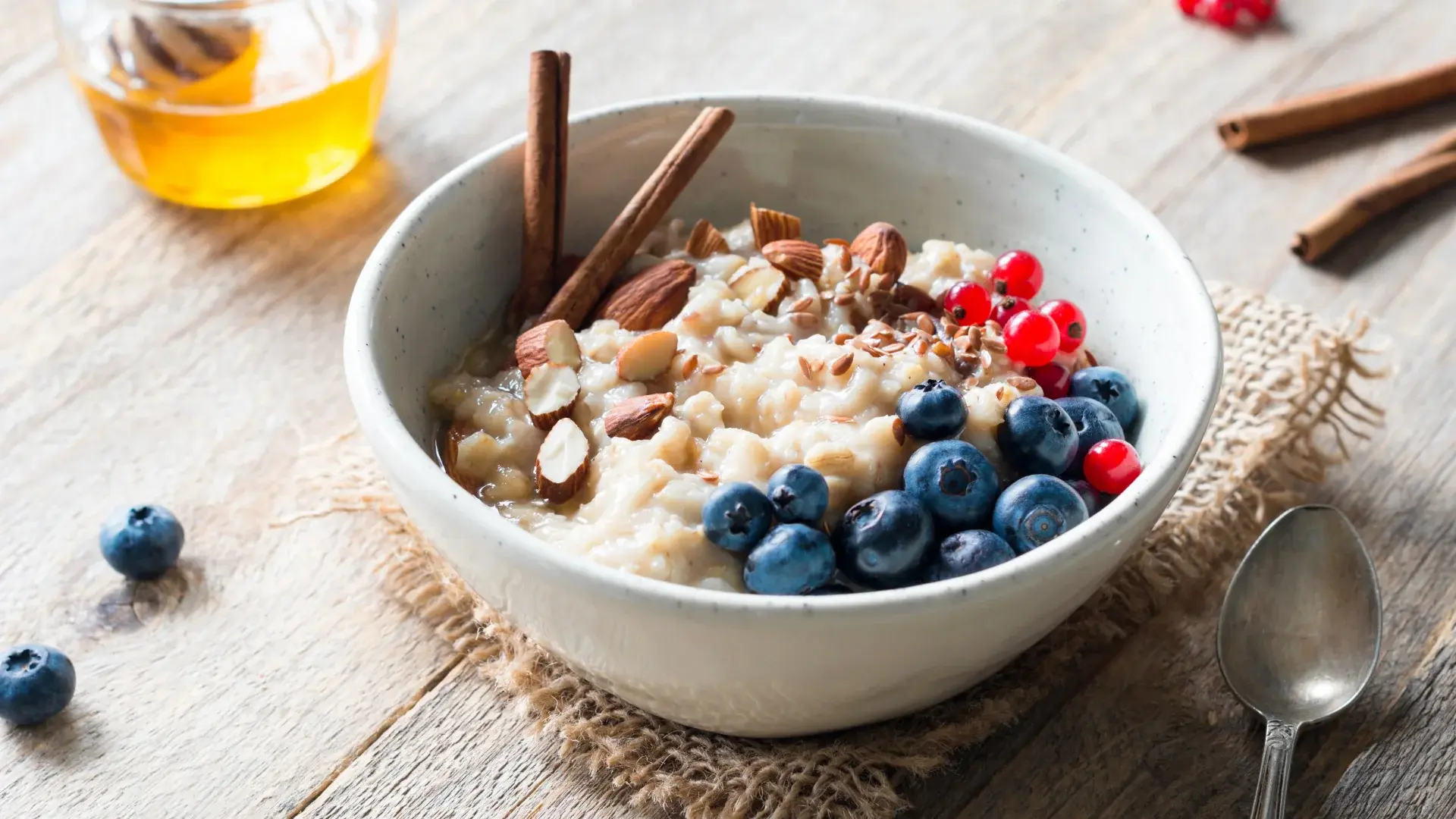
Yes, for many people, oatmeal can be a good breakfast option for IBS and a sensitive stomach. Oats mainly contain soluble fibre, including beta-glucans, which can contribute to normal bowel function and make oatmeal an easy way to include fibre in your diet.
At the same time, people with IBS react differently to foods. How well you tolerate oats depends, among other things, on the amount, how the oatmeal is prepared and what you eat with it.
Here we look at why oatmeal can be a good option for your gut, how oats affect bowel movements and how you can adapt your breakfast if you have IBS or experience digestive symptoms.
Is oatmeal good for your stomach?
For many people, oatmeal can be a gentle and nutritious option. Oats are a whole grain and contain soluble fibre, particularly beta-glucans.
Soluble fibre binds water and forms a gel in the intestine. This can contribute to a softer stool consistency and support regular bowel movements.
Oats also contain several vitamins, minerals and other nutrients that make them a nutritious food.
Why oatmeal may suit a sensitive stomach
Oatmeal has several properties that can make it a practical breakfast option:
- It contains soluble fibre.
- It is easy to prepare.
- The consistency can be adapted depending on how sensitive your stomach is.
- It can be combined with different foods according to individual tolerance.
- It can contribute to a regular fibre intake.
- Oats contain beta-glucans and other nutrients.
This does not mean that oats suit everyone. With IBS, even foods that are generally considered healthy can cause symptoms in some people.
Can you eat oatmeal if you have IBS?
Yes, but if you have IBS due to an overgrowth of bacteria in the small intestine (SIBO; research has shown that up to 85% of people with IBS have SIBO), you should first try to reduce SIBO with a dietary supplement that has bacteria-balancing properties.
Oats can be part of the diet even with IBS and are well tolerated by many people.
Oats mainly contain soluble fibre, which is generally recommended instead of large amounts of insoluble fibre for some IBS symptoms.
However, how much oats you tolerate can vary. If you are sensitive, it may be better to start with a smaller portion and see how your stomach reacts.
How to try oatmeal if you have a sensitive stomach
- If you tolerate oats: Start with a smaller portion and gradually increase it if your stomach feels comfortable.
- If you become bloated: Try reducing the portion size and look at what you are adding to the oatmeal. One of the ingredients or the total amount of fibre may be affecting your stomach.
- If you follow a low-FODMAP diet: Stay within a portion size that fits the diet’s recommendations and adapt the other ingredients according to your individual tolerance.
Are oats low-FODMAP?
Oats can be included in a low-FODMAP diet in appropriate portion sizes. It is important to remember that quantity matters when it comes to FODMAPs.
If you follow a low-FODMAP diet, use recommended portion sizes and adapt your diet according to your individual symptoms.
A low-FODMAP diet does not have to be a permanent way of eating. For people with IBS, it is often used as a structured way to identify which foods and quantities may trigger symptoms.
Why is soluble fibre good for the gut?
Soluble fibre absorbs water and can form a gel-like structure in the intestine. This can affect stool consistency and contribute to more regular bowel function.
Oats are particularly rich in beta-glucans, a type of soluble fibre.
Normal bowel motility is important for transporting contents through the gastrointestinal tract. Movement in the intestines between meals also helps transport remaining material through the small intestine.
This is one reason why normal bowel motility is important when supporting a balanced environment in the small intestine.
Can oats help with constipation?
Oats can contribute to an adequate fibre intake and thereby support normal bowel function.
At the same time, fibre needs to be combined with sufficient fluid intake. If you suddenly increase your fibre intake significantly, you may instead experience more gas or bloating.
If you are not used to eating high-fibre foods, it is therefore better to increase the amount gradually.
Can oatmeal help with bloating?
It depends on what is causing the bloating.
For some people, oatmeal can be a good option because it contains soluble fibre and is easy to adapt. For others, a larger amount of fibre can lead to more gas and bloating.
If you notice that you become bloated after eating oats, it may therefore be worth considering:
- How large a portion you eat
- Whether you have increased your fibre intake quickly
- What you eat together with the oatmeal
- Whether you use milk or other ingredients that you react to
- Whether you have other digestive symptoms at the same time
Often, it is the overall meal that determines how your stomach reacts.
What is the best breakfast for IBS?
There is no single breakfast that is best for everyone with IBS. The most important thing is to consider your own symptoms and tolerance.
An IBS-friendly breakfast could include:
- Oatmeal
- Eggs
- Lactose-free dairy products if you tolerate them
- Banana in an amount that suits you
- Berries that you tolerate
- Seeds or nuts in an appropriate amount
- Another source of protein
If you follow a low-FODMAP diet, you can choose ingredients based on their FODMAP content and portion size.
What can you add to oatmeal if you have IBS?
One of the benefits of oatmeal is that it is easy to adapt.
For example, you can combine your oatmeal with:
Protein:
Eggs, lactose-free yoghurt or another protein source that you tolerate.
Fruit and berries:
Choose the type and amount according to what your stomach tolerates.
Fat:
Nuts or seeds can add flavour and nutrients, but larger amounts may be difficult for some people to tolerate.
If you have IBS, it may be wise to introduce new ingredients one at a time. This makes it easier to understand what your stomach reacts to.
How can you make oatmeal gentler on the stomach?
If you have a sensitive stomach, you can try to:
- Start with a smaller portion.
- Cook the oatmeal thoroughly.
- Adjust the amount of fibre according to your tolerance.
- Drink enough water throughout the day.
- Avoid combining several new or potentially triggering foods in the same meal.
- Eat slowly and chew your food thoroughly.
If you experience clear symptoms from oats despite eating small portions, it may be better to choose another breakfast and investigate what may be behind your symptoms.
How are oats, bowel motility and SIBO connected?
Bowel motility plays an important role in how contents move through the small intestine.
Between meals, the migrating motor complex (MMC) becomes active and helps move remaining material through the small intestine. Normal bowel motility is therefore important for keeping the small intestine relatively free from bacteria.
SIBO, Small Intestinal Bacterial Overgrowth, means that bacteria are present in excessive amounts in the small intestine.
Oats do not treat SIBO, but the fibre in oats can be part of a varied diet that supports normal bowel function. If you have SIBO or suspect that you have SIBO, your diet should be adapted according to your individual symptoms.
Are oats good for leaky gut?
Oats can be part of a varied diet that supports a healthy gut environment.
Oats contain soluble fibre and beta-glucans that can influence the gut environment and microbiota. Fibre also acts as a substrate for bacteria in the colon, where it can be fermented and contribute to the production of short-chain fatty acids.
At the same time, the term “leaky gut” is broad and can be used to describe several types of altered intestinal barrier function. If you experience recurring digestive symptoms, it is therefore important to identify possible underlying causes.
What should you avoid with IBS?
There is no universal list of foods that everyone with IBS needs to avoid.
Common individual triggers can include:
- Large amounts of onion and garlic
- Certain dairy products
- Certain grain products
- Legumes
- Large amounts of fatty foods
- Carbonated drinks
- Alcohol
- Very large portions
This does not mean that these foods need to be avoided by everyone. Your own tolerance is more important than general lists of foods to avoid.
When should you seek help for digestive symptoms?
If you experience recurring bloating, abdominal pain, diarrhoea, constipation or other long-lasting digestive symptoms, it may be helpful to investigate what is causing them.
Seek medical care if you have serious or new symptoms, such as blood in the stool, unexplained weight loss, fever, severe abdominal pain or recurrent vomiting.